The PTA 668 Shortcode Architecture & Why Delivery Failures Occur
For more than a decade, national shortcode 668 has served as the foundational consumer audit interface in Pakistan's telecommunications regulatory framework. Established by the Pakistan Telecommunication Authority (PTA), this cellular shortcode enables any citizen to transmit their 13-digit Computerized National Identity Card (CNIC) number via text message and receive an automated accounting of their total registered SIM cards, broken down by operator (Jazz, Telenor, Zong, and Ufone) and subscription type (Voice SIMs vs. Mobile Broadband Data SIMs). With the strict legal limit capped at 5 Voice SIMs and 3 Data SIMs (8 total connections per CNIC), keeping an accurate inventory is vital for preventing identity theft, ghost SIM issuance, and regulatory disconnection.
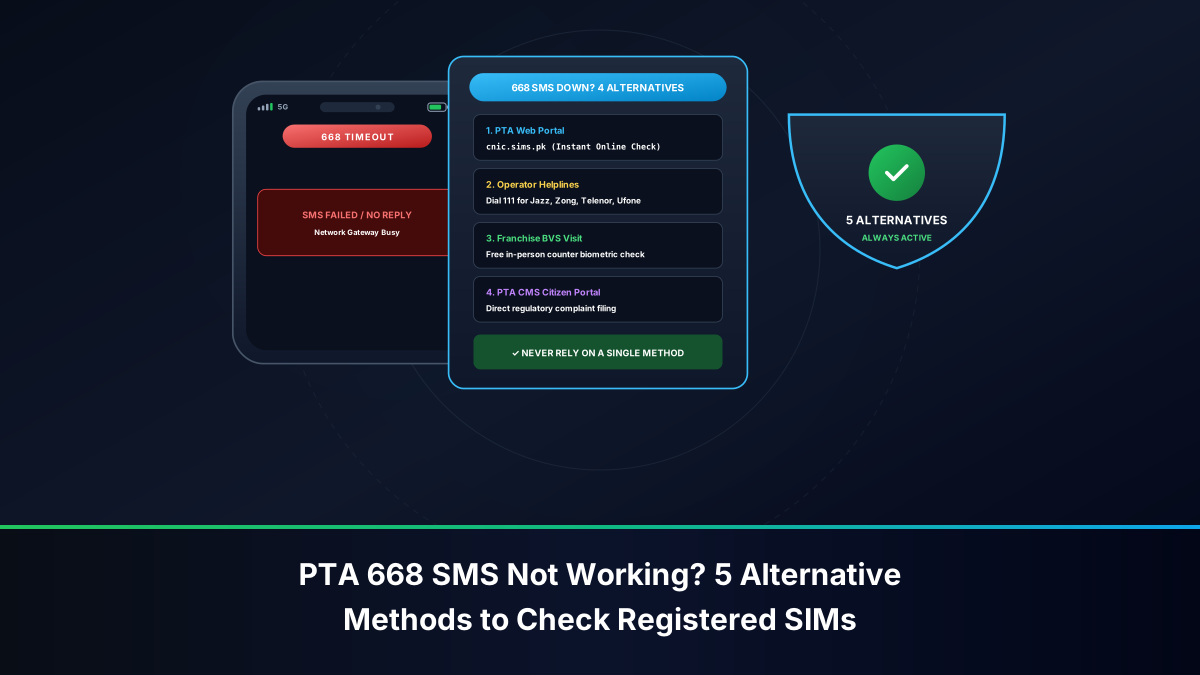
However, mobile subscribers frequently encounter situations where sending an SMS to 668 results in frustrating technical roadblocks: the message fails to send, remains stuck on "Sending...", returns an immediate carrier "Not Delivered" notification, or receives no automated clearinghouse reply despite repeated attempts. When the 668 SMS shortcode fails, citizens are not left without recourse. This comprehensive technical guide details the root causes of 668 delivery failures, immediate smartphone troubleshooting fixes, and authoritative alternative verification channels—including the official web portal, consumer applications, operator USSD engines, and in-person assisted checkpoints.
Technical Root Causes: SMSC Errors, Gateway Bottlenecks & Network Routing
To effectively resolve a 668 communication failure, one must understand the multi-tiered telecommunications architecture through which the message travels:
- Short Message Service Center (SMSC) Routing Faults: Shortcodes operate differently from standard 11-digit mobile numbers. When you dispatch a message to 668, your mobile handset routes the payload through your carrier's local Short Message Service Center (SMSC). If the SMSC address programmed into your handset's SIM firmware is corrupted, expired, or improperly formatted (e.g., missing the
+92international country code), the network switch immediately drops the shortcode packet. - Financial Gatekeeper & Micro-Billing Blocks: Unlike toll-free regulatory shortcodes, dispatching an SMS to 668 incurs a standard telecom tariff (typically PKR 2.00 to PKR 3.00 + tax). If your prepaid account balance is below this threshold, your carrier's Intelligent Network (IN) billing engine intercepts and terminates the message before it ever reaches the PTA clearinghouse gateway.
- Gateway Rate-Limiting & Clearinghouse Congestion: The central clearinghouse server maintained by the Pakistan Mobile Database (PMD) handles hundreds of thousands of simultaneous inquiries daily. During major national security campaigns, SIM blocking drives, or tax enforcement deadlines, inbound message queues experience severe server throttling, leading to packet timeouts and dropped response broadcasts.
- Spam and Premium SMS Handset Restrictions: Contemporary Android operating systems (including Samsung One UI, Xiaomi HyperOS, and Google Pixel OS) enforce native "Premium SMS" security barriers. If the user previously selected "Never Allow" when prompted whether the messaging app could send texts to short numbers that may incur charges, the smartphone silently blocks all outgoing shortcodes.
- International Roaming Incompatibility: Cellular networks abroad do not recognize Pakistani 4-digit national shortcodes. If you are roaming overseas, attempting to dispatch an SMS to 668 fails instantly at the foreign carrier's base station.
Quick Subscriber Fixes: Handset SMSC Configuration & Balance Checks
Before abandoning the 668 SMS channel, execute these rapid diagnostic procedures on your smartphone to restore shortcode dispatch:
- Audit Prepaid Airtime Balance: Dial your operator's balance inquiry code (Jazz:
*111#, Zong:*222#, Telenor:*444#, Ufone:*124#). Ensure you possess at least PKR 5.00 in main balance. Note that airtime loan advances (e.g., Jazz Advance) often prioritize debt recovery and may block premium shortcode messaging until fully settled. - Verify and Reconfigure SMSC Numbers: If your messages fail to send across all shortcodes, manually inspect your carrier's SMS Center address in your Messaging App Settings (or via the Android testing dialer
*#*#4636#*#*> Phone Information > SMSC):- Jazz (PMCL):
+92300000012 - Zong (CMPak):
+923189200068 - Telenor Pakistan:
+923455000010 - Ufone (PTCL):
+92333000515
- Jazz (PMCL):
- Adjust Android Premium SMS Permissions: Navigate to Settings > Apps > Special App Access > Premium SMS Access > Messages, and toggle the permission setting to "Always Allow" or "Ask Every Time".
- Cleanse Text Formatting: Ensure your message contains strictly the 13 digits of your CNIC with zero spaces, dashes, commas, or additional explanatory words. For example, enter
3520212345671, NOT35202-1234567-1orCNIC 3520212345671.
Alternative 1: The Official Web Clearinghouse at cnic.sims.pk
The most robust, rapid, and entirely free alternative to the 668 SMS shortcode is the official PTA SIM Information System web clearinghouse, available 24/7/365 at cnic.sims.pk:
- Open the Official URL: Launch Google Chrome, Apple Safari, or Mozilla Firefox and navigate directly to https://cnic.sims.pk. Always verify the
.gov.pkor.sims.pkdomain extension to ensure you are not visiting fraudulent phishing lookalikes. - Input CNIC Credentials: Enter your 13-digit CNIC number in the central input field without hyphens.
- Solve the Security CAPTCHA: Check the "I am not a robot" Google reCAPTCHA checkbox. This safeguard protects the national database from automated scraping scripts.
- Submit Inquiry: Click the "Submit" button. Within 3 to 5 seconds, an encrypted database call is executed directly against the PMD central repository.
- Interpret the Results Table: The portal renders a clear, color-coded tabular summary displaying your total active voice SIMs, data SIMs, and network-by-network distribution across Jazz, Telenor, Zong, and Ufone. Take a screenshot for your permanent records.
Alternative 2: PTA Complaint Management System (CMS) Mobile App
The Pakistan Telecommunication Authority maintains an official public utility application for mobile devices known as PTA CMS (Consumer Complaint Management System), available on the Google Play Store and Apple App Store:
- Integrated Consumer Identity Audit: Beyond filing grievances against cellular operators, the PTA CMS app integrates direct subscriber profile auditing modules.
- Secure Citizen Registration: When you register on the CMS app using your CNIC, email address, and mobile number, your account creates a verified citizen dashboard.
- Live Line Enumeration: The application queries the PTA central subscriber database, allowing you to view your aggregate registered SIM counts and cross-reference them directly within the regulatory portal.
- One-Tap Dispute Escalation: If the SIM count revealed in the app does not match your personal physical inventory, you can immediately initiate a formal dispute inquiry directly from the app interface, bypassing retail intermediaries.
Alternative 3: Self-Service Carrier Smartphone Apps & USSD Query Codes
If you need to verify whether a specific SIM card in your possession is legally registered under your own CNIC, or audit your lines with a specific operator, you can utilize each carrier's proprietary self-service ecosystem:
| Operator Network | Official Smartphone App | Free On-Net USSD Code | SMS Inquiry Shortcode |
|---|---|---|---|
| Jazz / Warid | Jazz World (Self-Care) | *1111# (Subscriber Info) |
Send blank SMS to 300 |
| Zong (CMPak) | My Zong App | *310# > Account Info |
Send V to 7911 |
| Telenor Pakistan | My Telenor App | *777# (Profile Check) |
Send blank SMS to 7751 |
| Ufone (PTCL) | My Ufone App | *336# > 1 (SIM Details) |
Send CNIC to 336 |
By logging into each carrier's self-service smartphone app, the dashboard will prominently display the registered owner's legal name, CNIC number (partially masked for privacy), active tariff package, and ICCID SIM serial number.
Alternative 4: Physical Assisted Audits at NADRA e-Sahulat & Franchises
For citizens who do not possess internet-connected smartphones, senior citizens, or those in remote rural locations experiencing persistent telecommunications outages, assisted in-person verification provides complete certainty:
- NADRA e-Sahulat Kiosks: Pakistan hosts over 12,000 authorized NADRA e-Sahulat centers located in urban towns and rural union councils. Operators at these community kiosks utilize dedicated, secure fiber-optic lines linked directly to NADRA's citizen identity framework. Present your original Smart CNIC and request a citizen telecommunications verification audit.
- Company-Operated Customer Service Centers (CSCs): Visiting a corporate customer service center of Jazz, Zong, Telenor, or Ufone allows you to bypass the public aggregate count limitations of 668. A customer service officer will verify your original CNIC on a BVS biometric terminal and provide an exhaustive, authoritative printout detailing the exact 11-digit MSISDN of every connection active under your name on their network.
- PTA Zonal Consumer Desks: PTA maintains regional zonal directorates in Islamabad, Karachi, Lahore, Peshawar, Quetta, Rawalpindi, and Multan. Citizens experiencing severe database discrepancies or suspected identity theft can visit these zonal offices to receive direct regulatory mediation.
System Comparison: Performance, Latency & Reliability Across Channels
Evaluate the operational characteristics of each verification method to determine the optimal channel for your immediate requirement:
| Verification Channel | Direct Financial Cost | Average Latency | Data Scope Provided | Reliability Score |
|---|---|---|---|---|
| 668 SMS Shortcode | PKR 2.00 - 3.00 + Tax | 30 - 180 Seconds | Aggregate Counts (All Networks) | 85% (Subject to Gateway Load) |
| cnic.sims.pk Web | 100% Free | 2 - 5 Seconds | Aggregate Counts (All Networks) | 98% (High-Availability HTTPS) |
| PTA CMS App | 100% Free | Instant Dashboard | Aggregate Counts + Dispute Tools | 95% (Requires App Account) |
| Carrier Apps (Jazz/Zong) | 100% Free | Instant Real-Time | Detailed Profile (Single Network) | 99% (Operator Direct Node) |
| Corporate CSC Franchise | 100% Free under PTA Rules | In-Person Visit | Exact 11-Digit MSISDN Lists | 100% (NADRA Biometric Level) |
Auditing SIM Holdings from Abroad: Solutions for Overseas Pakistanis
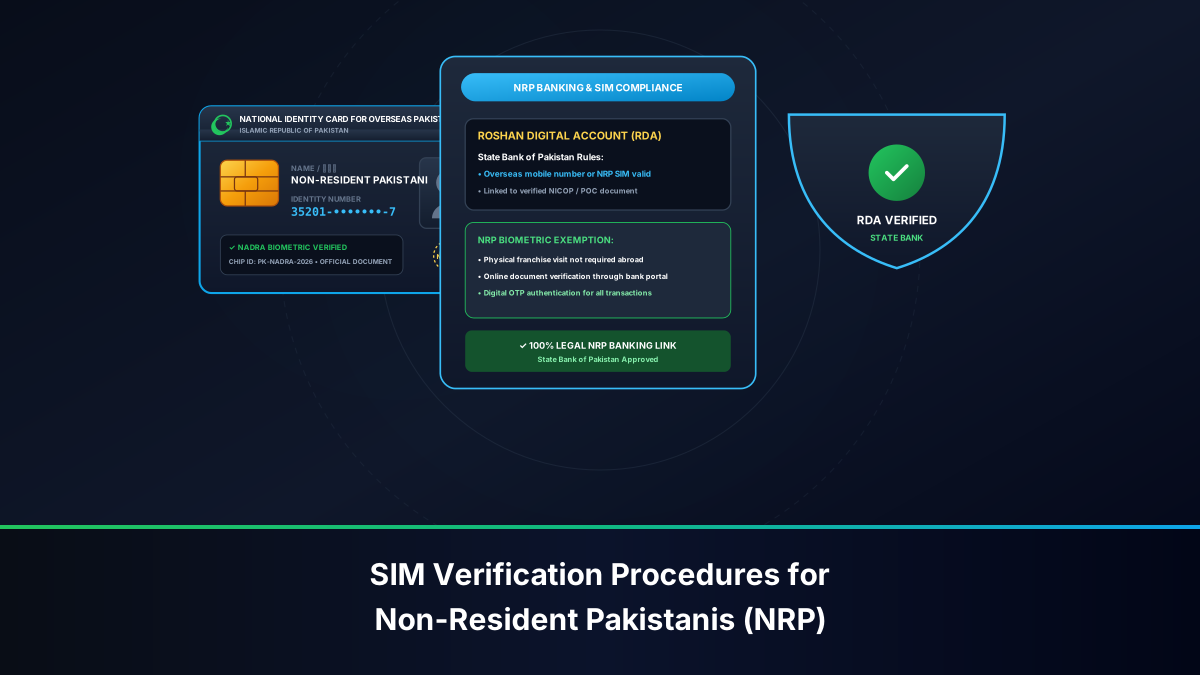
Non-Resident Pakistanis (NRPs) living in the Gulf (UAE, Saudi Arabia, Qatar, Oman), the United Kingdom, Europe, and North America frequently face 668 SMS failures because international roaming partners do not route 4-digit shortcodes across global SS7/Diameter signaling exchanges. If you are abroad and need to audit your Pakistani SIMs:
- Connect to Local Wi-Fi: Disregard SMS shortcodes entirely while operating your phone on a foreign carrier network.
- Access cnic.sims.pk Directly: Open your web browser and navigate to cnic.sims.pk. The web clearinghouse operates seamlessly across global IP addresses without requiring a Pakistani VPN.
- Enter Your NICOP / Smart CNIC: Enter your 13-digit identity number and solve the CAPTCHA.
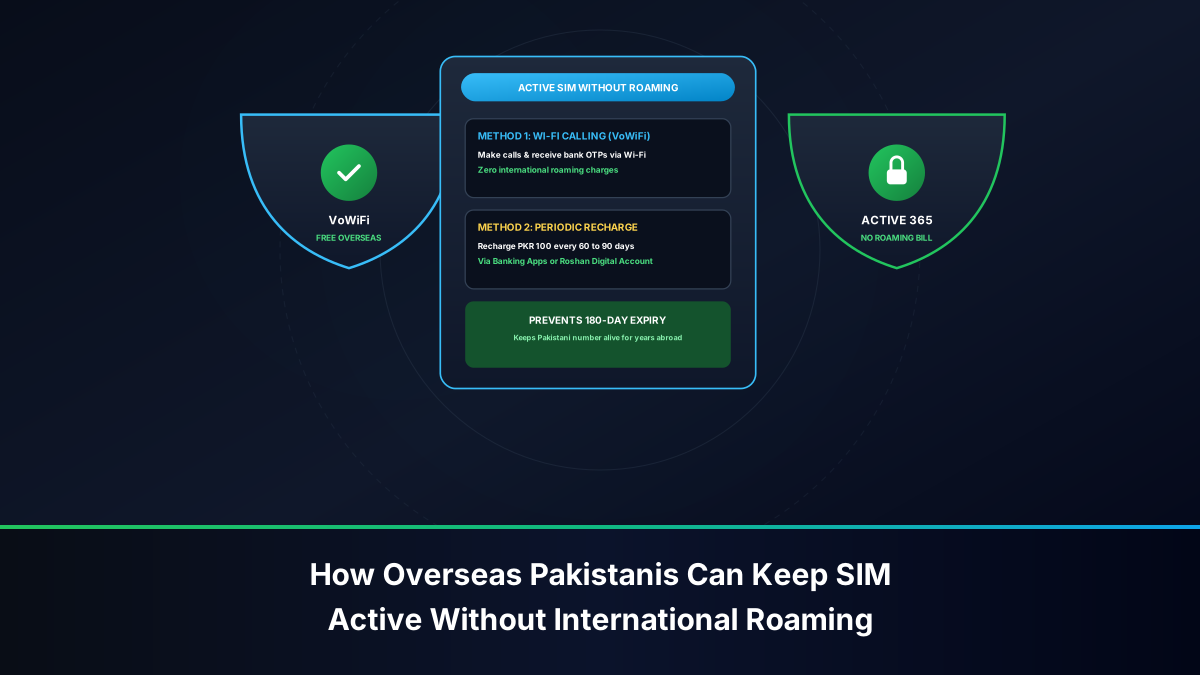
- Monitor Expiring or Barred Roaming SIMs: If you maintain an active Pakistani SIM card abroad to receive banking OTPs, ensure that your aggregate line counts remain clean and that your primary roaming number is not in jeopardy of being flagged for non-verification.
- Contact Operator International Desks: If database errors arise, reach out to operator international support teams via email or WhatsApp helpline desks (e.g., Jazz Overseas Support or Zong International Roaming Helpdesk) with scanned copies of your valid NICOP and passport.
Frequently Asked Questions: 668 SMS Failures & Alternative Methods
Direct, regulatory-grounded solutions addressing citizen issues when checking SIM ownership records across Pakistani networks.
Deep Dive: SS7, MAP Protocols & SMS Gateway Signaling in Pakistan
To grasp why cellular shortcodes like 668 occasionally experience transient blackouts, it is necessary to examine the underlying telecommunications signaling fabric that links mobile subscribers to national regulatory repositories. In the cellular architecture of Pakistan's licensed Mobile Network Operators (MNOs)—Pakistan Mobile Communications Limited (Jazz/Warid), CMPak (Zong), Telenor Pakistan, and Pak Telecom Mobile Limited (Ufone)—text messaging does not operate over arbitrary IP data channels. Instead, shortcodes utilize specialized Signaling System No. 7 (SS7) and Mobile Application Part (MAP) signaling routes that interface between operator Short Message Service Centers (SMSC) and third-party regulatory gateway aggregators.
When you enter 668 into your dialer and transmit your 13-digit CNIC, your handset initiates a MAP_MO_FORWARD_SHORT_MESSAGE operation over the radio access network (whether GSM, UMTS, LTE, or 5G NR signaling radio bearers). The local base transceiver station relays this payload to the Serving GPRS Support Node (SGSN) or Mobility Management Entity (MME), which routes it to the operator's SMSC. At this junction, the SMSC performs a routing lookup against an internal shortcode routing translation table. If the shortcode table designates 668 as a paid transaction, an immediate credit interrogation request is dispatched to the carrier's real-time Online Charging System (OCS) or Intelligent Network (IN) via the CAMEL Application Part (CAP) or Diameter Credit-Control Application (Ro interface).
If the OCS returns an INSUFFICIENT_FUNDS response, the SMSC immediately generates a delivery failure report back to the radio network, resulting in the dreaded "Message not sent" or red exclamation point on the user's handset. Conversely, if credit is successfully reserved, the SMSC packages the 13-digit payload into a standard SMPP (Short Message Peer-to-Peer) protocol packet and transmits it across a secure, leased IPSec VPN tunnel directly to the Pakistan Mobile Database (PMD) clearinghouse infrastructure situated in Islamabad. The PMD gateway parses the CNIC, queries its high-throughput relational database cluster (which maintains real-time synchrony with NADRA's centralized citizen registries), extracts the operator-by-operator SIM distribution matrix, and initiates a reverse MAP_MT_FORWARD_SHORT_MESSAGE sequence through the originating operator's gateway to deliver the response SMS back to the subscriber's handset.
Security and Anti-Fraud Precautions: Protecting CNIC Data from Malicious Scraping
Because your Computerized National Identity Card number is the master biometric anchor for all your telecommunications, financial banking, and civic identity services in Pakistan, querying its status must always be conducted through strictly secured channels. Cybercriminals and social engineering scammers frequently exploit the public's confusion surrounding 668 delivery failures by deploying deceptive alternatives:
- Beware of Unofficial Android APKs: Deceptive third-party utilities claiming to provide "Live Tracker", "Pak SIM Data", or "Number to CNIC Finder" frequently circulate on third-party app repositories and WhatsApp groups. These fraudulent applications do not possess live access to the PTA clearinghouse. Instead, they operate on leaked, outdated, and illicit databases from 2011 to 2018 while surreptitiously exfiltrating your phone's personal contacts, SMS messages, and GPS coordinates to remote command-and-control servers.
- Phishing Lookalike Portals: Always inspect the browser address bar before inputting your 13-digit CNIC on any website. The sole authorized, PTA-managed public web clearinghouse is located at
https://cnic.sims.pk. Never input identity credentials into domains featuring suspicious top-level extensions (e.g.,.xyz,.info,.tk, or unofficial blog-hosted query forms). - Confidentiality of Identity Documentation: Under the Prevention of Electronic Crimes Act (PECA) 2016, unauthorized interception, transmission, or commercial harvesting of a citizen's CNIC and biometric data constitutes a non-bailable federal offense. When sharing copies of your Smart CNIC for legitimate business purposes, always draw double diagonal cross-lines across the photocopy and clearly annotate: "For Bank Account Verification Only" or "For Telecom Franchise Audit Only" along with the date, preventing rogue retail agents from scanning or recycling your physical document to register unauthorized proxy SIMs.
- Immediate Escalation of Phantom Connections: If auditing your CNIC reveals an unexpected voice or data line registered with any operator, do not delay. Treat unverified connections as an active security breach. Such lines may be actively utilized in financial telemarketing fraud, illegal grey telephony bypass, or SIM-swap account takeovers. Visit the respective operator's corporate customer center immediately to trigger a forced regulatory block and surrender the unauthorized MSISDN.
Comprehensive Decision Matrix: Choosing the Right Alternative Based on Your Situation
Depending on your geographic location, available hardware, connectivity constraints, and budget, refer to this authoritative decision matrix to determine your fastest path to verifying your SIM ownership counts:
- Subscriber Has Smartphone with Active Internet: Bypass SMS entirely. Launch Chrome or Safari and visit cnic.sims.pk. Completion time: under 15 seconds. Cost: Free.
- Subscriber Has Zero Airtime Balance and No Mobile Data: Connect to any local home or office Wi-Fi network and access the web clearinghouse at cnic.sims.pk, or visit the nearest authorized NADRA e-Sahulat agent.
- Subscriber Is Overseas on International Roaming: Do not dial 668. Utilize cnic.sims.pk over Wi-Fi, or log in to your Jazz World, My Zong, My Telenor, or My Ufone application linked to your roaming MSISDN.
- Subscriber Discovers an Unknown SIM on Their CNIC: 668 and cnic.sims.pk will not display the 11-digit phone number. Take your original Smart CNIC directly to the nearest corporate franchise or customer service center of the operator where the phantom line is registered, undergo biometric thumbprint verification, obtain the full 11-digit MSISDN, and demand an immediate PTA BVS Disconnection Form.