The Anatomy of SIM Fraud: Why Criminals Target Pakistani CNICs
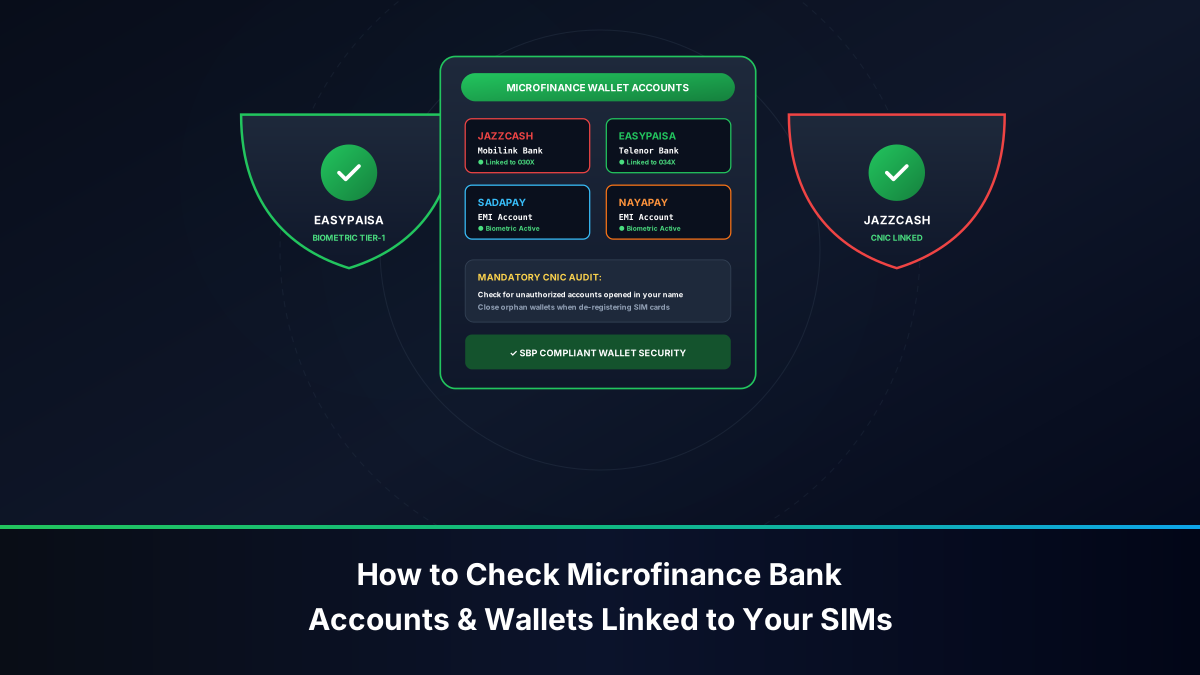
In Pakistan's digitized telecommunications ecosystem, a Computerized National Identity Card (CNIC) is not merely an identity document; it is the universal authentication root for telecommunications, digital banking wallets (JazzCash, EasyPaisa, Nayapay, SadaPay), branchless banking, and government subsidy disbursements (such as BISP and Ehsaas). Because the Pakistan Telecommunication Authority (PTA) strictly mandates that no cellular subscriber Identity Module (SIM) can be activated without real-time biometric verification against the National Database and Registration Authority (NADRA) database, organized criminal rings place immense value on acquiring the identity credentials of innocent citizens. When cybercriminals, financial scammers, and extortionists operate, they avoid using SIM cards registered in their own names to evade law enforcement triangulation and technical interception.
Instead, these threat actors deploy sophisticated social engineering, rogue retail syndicates, and biometric manipulation techniques to create what are colloquially termed "fake SIMs" or "ghost SIMs"—cellular connections registered against the authentic CNIC records and biological signatures of law-abiding individuals who have no knowledge of their existence. Understanding how these fraudulent connections are engineered, identifying the vulnerabilities in everyday transactions, and establishing robust identity defense protocols are essential skills for every Pakistani mobile subscriber.
Technical Exploits: How Fraudulent SIMs Are Created Despite BVS
Since the nationwide mandatory biometric verification rollout under the National Action Plan (NAP), the issuance of unregistered, pre-activated SIMs has been eliminated across Pakistan's licensed Cellular Mobile Operators (CMOs)—Jazz, Telenor, Zong, Ufone, and ONIC. To circumvent these regulatory controls, criminal networks have devised complex illicit workflows targeting the physical and biometric verification stages of subscriber enrollment.
Silicone Latent Fingerprints & Franchise Retailer Collusion
The primary vector for fraudulent SIM issuance in recent years has been the illicit fabrication of artificial latent fingerprints. The methodology operates through a multi-stage criminal supply chain:
- Deceptive Biological Capture: Rogue roadside vendors, unauthorized mobile repair kiosks, or fraudulent micro-finance agents entice unsuspecting citizens into pressing their fingers onto non-standard optical scanners under the pretext of "free SIM card distributions," "food ration registration," "lucky draw prizes," or "urgent government cash relief enrollment."
- Silicone Impression Moulding: Instead of transmitting the biological scan exclusively to NADRA, the perpetrator captures the high-resolution capacitive or optical ridge-and-valley map. Using photopolymer resins, silicone elastomer solutions, or medical dental impression wax, the syndicate manufactures artificial 3D rubber thumb sleeves possessing the exact friction ridge structure of the victim's finger.
- Collusive Retailer Terminal Execution: Unscrupulous third-party retailer agents operating BVS Point of Sale (POS) android biometric devices utilize these synthetic silicone impressions to authenticate SIM activation transactions during off-peak hours or in remote franchise areas. Because early optical BVS scanners evaluated only 2D pattern matches rather than subdermal pulse or skin conductivity, the system registered a successful biometric match against NADRA records.
- Ghost Distribution: The newly activated SIM cards are bundled into batches and sold on black-market Telegram channels, dark web forums, or grey-market kiosks at premium prices to fraudsters operating OTP interception rackets, lottery prize scams, and illegal call-forwarding termination gateways.
Unauthorized SIM Swaps, eSIM Provisioning & SIM Cloning Exploits
Beyond the issuance of brand-new illicit SIM cards, fraudsters target already active, high-reputation mobile connections through account hijacking techniques:
- Social Engineering SIM Swap Fraud: In this vector, the attacker gathers identity dossiers on a specific high-net-worth target (CNIC number, father's name, mother's maiden name, date of birth, and place of issue). Posing as the legitimate subscriber at an informal franchise or through a collusive telecom customer service representative, the fraudster files a fraudulent "Lost SIM / Damaged SIM Replacement" request. If the franchise fails to enforce multi-finger liveness protocols, the victim's active SIM is abruptly deactivated, and network control transfers instantly to the criminal's physical SIM card, allowing immediate interception of banking SMS 2FA codes.
- Illicit eSIM QR Provisioning: With the rapid adoption of digital embedded SIMs (eSIM), syndicates target operator self-service digital web portals. By compromising the subscriber's self-care credentials through phishing or brute-force attacks, criminals trigger an eSIM profile migration, generating an activation QR code that transfers the phone number to an unauthorized device abroad.
- Legacy SIM Cloning Limitations: True physical SIM card cloning involves reading the International Mobile Subscriber Identity (IMSI) and the 128-bit secret authentication key ($K_i$) directly from the smart card microchip via an EEPROM smartcard reader. While early GSM Phase 1 SIM cards running the broken COMP128-v1 cryptographic algorithm were susceptible to over-the-air key extraction within minutes, modern Pakistani USIM cards (Universal Subscriber Identity Module) utilize COMP128-v2, COMP128-v3, or AES-based Milenage authentication algorithms, rendering direct chip-level cryptographic cloning practically impossible without physical laboratory decapping. Thus, modern "cloning" in Pakistan almost exclusively refers to administrative SIM Swaps and unauthorized BVS activations rather than chip extraction.
Everyday Vulnerabilities: How Your CNIC Data Leaks in Pakistan
Citizens often wonder how criminal syndicates obtain their personal demographic information. In everyday Pakistani civic and commercial life, personal CNIC data is routinely exposed across insecure, unregulated checkpoints:
- Unmarked Photocopy Dissemination: Handing uncrossed photocopies of your CNIC to residential security gates, hotel reception desks, car rental agencies, property dealers, job application dropboxes, and private club entry points creates an unmonitored paper trail. Dishonest clerical staff frequently sell discarded CNIC photocopy bundles to grey-market data brokers.
- Mobile Recharge & Top-Up Retailers: When mobile subscribers perform over-the-counter balance top-ups (Easyload) by verbally announcing their phone number or writing their mobile number on a paper ledger at a local general store, bad actors link that phone number to the customer's identity.
- Corporate and Institutional Data Breaches: Unencrypted databases maintained by private colleges, courier delivery services, ride-hailing startups, and eCommerce merchants have historically leaked SQL dumps containing names, CNIC numbers, residential addresses, and mobile numbers onto underground forums.
- Phishing Schemes & Spoofed Inquiries: Fraudsters impersonating state bank officials, PTA compliance auditors, or law enforcement officers initiate phone calls claiming that the subscriber's account will be blocked unless they disclose their Mother's Maiden Name, CNIC Date of Issuance, or incoming verification OTPs.
The Cross-Marking Protocol for CNIC Physical Photocopies
Whenever you are legally or administratively obligated to submit a physical photocopy of your CNIC (such as opening a bank account, signing a tenancy lease, purchasing real estate, or processing an academic admission), you must systematically deface the copy to prevent unauthorized secondary usage while preserving its administrative validity:
| Element / Instruction | Correct Security Practice | Hazardous Insecure Practice |
|---|---|---|
| Parallel Diagonal Cross-Lines | Draw two bold, indelible diagonal parallel lines across the entire face of the document using blue or black permanent marker ink. | Leaving the photocopy blank with clear margins around the edges. |
| Purpose Specification | Write clearly between the parallel lines: "FOR [SPECIFIC INSTITUTION] USE ONLY FOR [SPECIFIC PURPOSE]" (e.g., "FOR MEEZAN BANK ACCOUNT OPENING ONLY"). | Omitting the intended purpose, allowing the document to be repurposed for telecom activations. |
| Mandatory Expiry / Submission Date | Explicitly append the date of signing: "VALID UNTIL: DD/MM/YYYY - SIGNED BY APPLICANT". | Submitting undated copies that can be archived and abused years later. |
| Critical Area Intersection | Ensure the ink lines intersect the printed CNIC number, date of issue, and personal portrait photo so digital editing leaves obvious artifacts. | Writing only on the white margin or bottom corner of the A4 paper. |
Step-by-Step Remediation: Neutralizing Unauthorized SIMs on Your CNIC
If you suspect or discover that an unauthorized SIM card is registered under your CNIC, follow this sequential regulatory protocol to secure your identity and protect yourself from criminal vicarious liability:
- Immediate Diagnostic Audit via PTA 668: Send your 13-digit CNIC number without hyphens or spaces in an SMS to shortcode 668 from your primary mobile number (standard tariff applies, PKR 2 + tax). Alternatively, navigate to the official PTA web portal at cnic.sims.pk. Record the exact breakdown of registered SIM counts across Jazz, Telenor, Zong, and Ufone.
- Cross-Reference with Personal Holdings: Count all active SIM cards physically in your possession, including SIM cards used in household tablets, Wi-Fi 4G LTE routers, car GPS trackers, and smartwatches. Any discrepancy between your known SIM count and the 668 report represents a high-risk ghost connection.
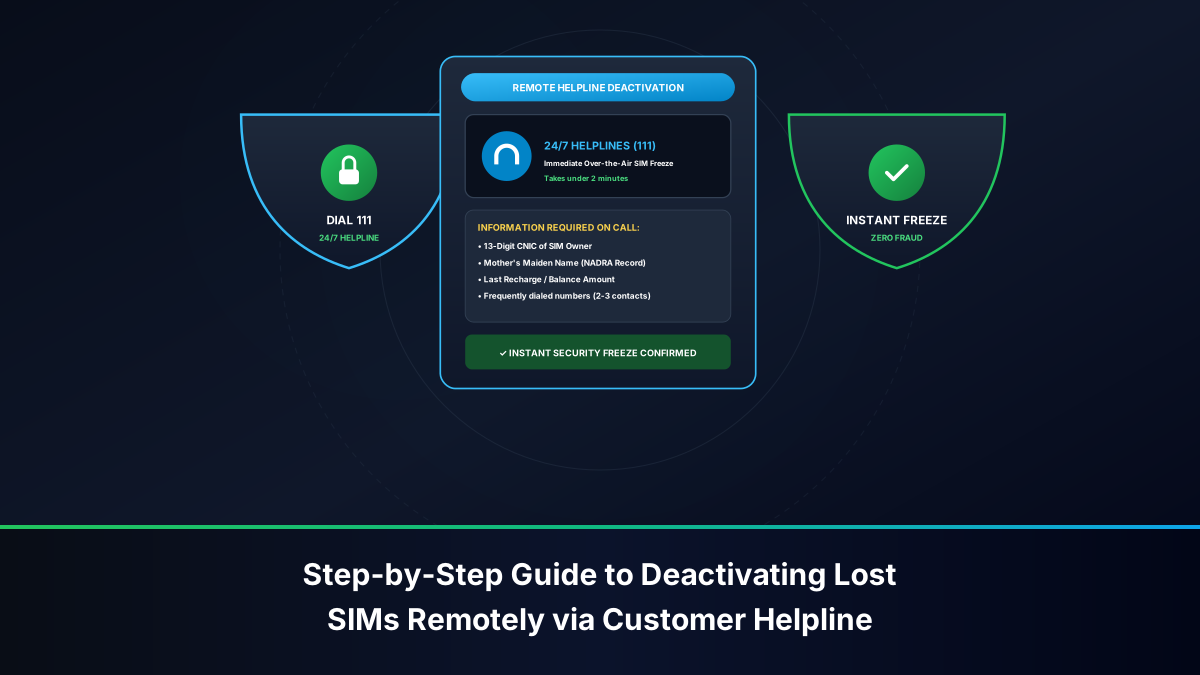
- Physical Appearance at Operator Franchise: Visit the official Company-Operated Customer Service Centre (not an informal retailer or roadside kiosk) of the specific operator hosting the unauthorized number. Present your original Smart CNIC / SNIC.
- Execute Biometric Disownment (Form B): Demand an immediate connection termination and request the operator's standardized "SIM Disownment / De-registration Application." You must complete an authentic biometric verification scan on the operator's corporate terminal to permanently disown and terminate the MSISDN.
- Secure Stamped Written Proof: Never leave the customer centre without an official, stamped de-registration receipt bearing the ticket reference number, timestamp, terminated MSISDN, and the representative's official signature. This document is your vital legal shield if the terminated number was previously used in unlawful conduct.
- Lodge Formal Regulatory Complaint with PTA CMS: If the operator fails or refuses to immediately terminate the unauthorized connection, submit an immediate formal grievance through the PTA Complaint Management System at complaint.pta.gov.pk or call the toll-free helpline at 0800-55055. Provide the operator's reference ticket number and your CNIC.
- Preemptive Protection Report to FIA Cyber Crime Wing: In circumstances where the unauthorized SIM was used in financial extortion, harassment, or illegal transactions before its termination, proactively report the incident to the Federal Investigation Agency (FIA) National Cyber Crime Investigation Agency (NCCIA) portal at complaint.fia.gov.pk or visit your nearest regional FIA Cyber Crime Circle to record your statement.
Legal Framework: PECA 2016 Penalties for Identity Fraud & Ghost SIMs
The state of Pakistan treats the fraudulent issuance, possession, and commercial exploitation of unverified or illegally registered SIM cards as severe offenses under the Prevention of Electronic Crimes Act (PECA) 2016 and the Pakistan Telecommunication (Re-organization) Act 1996:
- PECA Section 13 (Electronic Forgery): Anyone who creates, alters, or uses forged electronic documents, synthetic biometric credentials, or digital identity tokens faces imprisonment of up to seven years, a fine of up to five million rupees, or both.
- PECA Section 14 (Electronic Fraud): The illicit creation of SIM cards to gain unlawful financial advantage or deceive telecom authentication mechanisms incurs imprisonment of up to two years, a fine of up to ten million rupees, or both.
- PECA Section 16 (Unauthorized Use of Identity Information): Obtaining, selling, possessing, or transmitting another person's biometric data, CNIC number, or electronic identity credentials without lawful authorization carries a prison sentence of up to three years and a fine of up to five million rupees. Victims of identity theft have the right to request judicial orders compelling telecom operators to destroy or quarantine all tainted data profiles.
- PTA Regulatory Sanctions on Retailers: Franchisees and retail agents caught participating in silicone thumbprint exploitation, identity spoofing, or ghost SIM issuance face immediate permanent license revocation, forfeiture of security deposits, blacklisting across all CMOs, and direct criminal indictment by the FIA.
Proactive Identity Hygiene: Biometric Rescans & Account Defenses
To ensure your national identity credentials remain entirely secure against future cyber and telecom exploits, implement the following ongoing best practices:
- Quarterly 668 Audits: Set a recurring calendar reminder every three months to verify your CNIC SIM count via 668 SMS or cnic.sims.pk. Immediately investigate any unexpected increase in voice or data connections.
- Biometric Rescan & Liveness Updates: If your CNIC was issued prior to the integration of modern multi-spectral liveness sensors, visit a NADRA Mega Center to update your biometric profiles with refreshed ten-finger optical scans and high-resolution facial iris captures. NADRA's updated live-finger algorithms easily detect and flag synthetic silicone artifacts.
- Absolute Prohibition of OTP Disclosure: Understand that no legitimate telecom customer representative, NADRA officer, or banking security official will ever contact you requesting a one-time verification passcode (OTP) or asking you to perform a biometric verification scan at an unverified location.
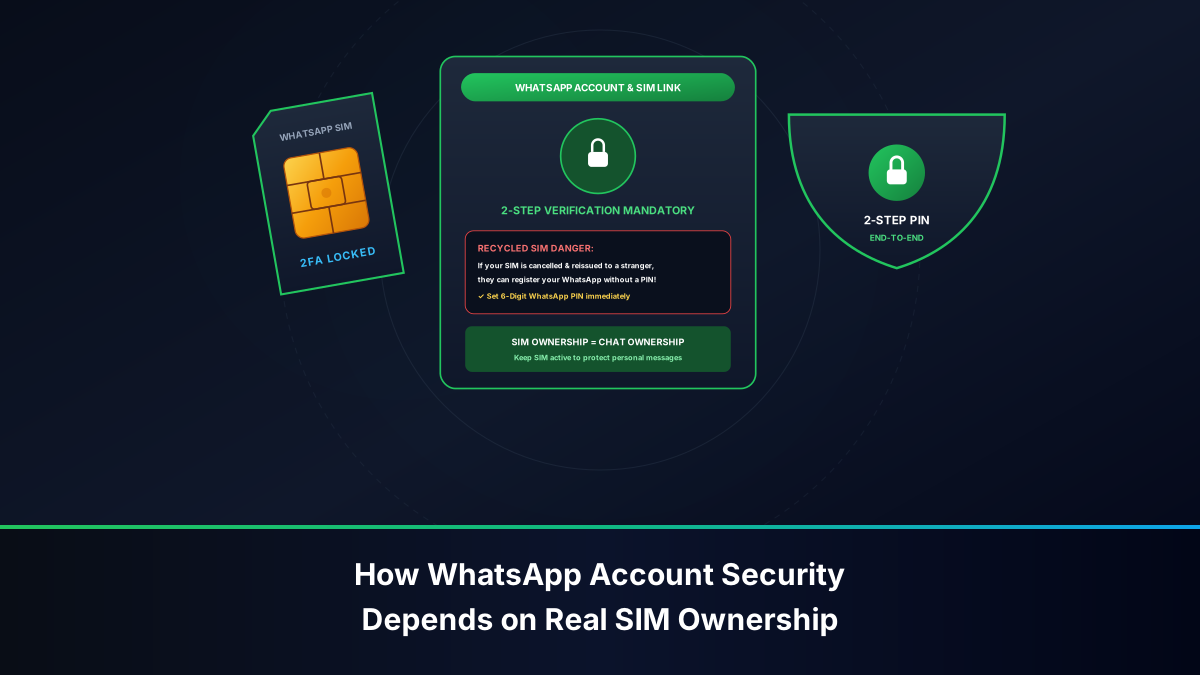
- Protect SIM Microchips with PIN/PUK Security: Enable the native SIM PIN lock feature within your smartphone operating system (iOS or Android). This ensures that even if your physical handset or SIM card is misplaced or stolen, the chip cannot be inserted into another phone to receive banking passcodes without entering the 4-digit PIN.
- Avoid Casual Third-Party Biometrics: Never provide fingerprint authentications to roaming agents claiming to offer free data bundles, door-to-door retail promotions, or unverified public prize campaigns. All biometric verifications should occur inside established, brick-and-mortar retail environments subject to CCTV surveillance.
Frequently Asked Questions Regarding SIM Fraud & Identity Protection
Below are authoritative, direct answers to the most critical inquiries regarding illegal SIM issuance, biometric security, and CNIC defense in Pakistan.